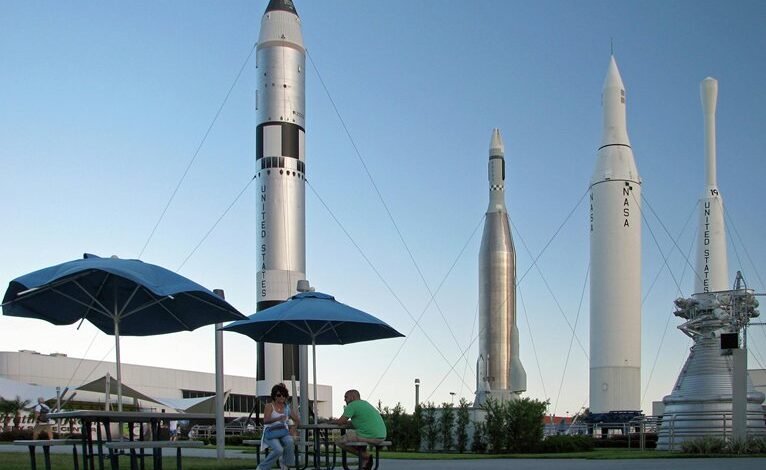
The Pulse Access Node 0120974621 Rocket Contact Frame serves as a precise structural interface for telemetry timing and repeatable pulse pathways. It enables deterministic alignment across modules, supports modular wiring and fault-tolerant channels, and allows rapid reconfiguration with continuous self-test. The design emphasizes traceability, timing discipline, and mission assurance for ground tests and on-orbit operations. Its integration approach invites scrutiny of reliability under varied signaling schemes, raising questions about scalability and maintenance strategies.
What Is the Pulse Access Node 0120974621 Rocket Contact Frame
The Pulse Access Node 0120974621 Rocket Contact Frame is a specialized structural component designed to support and align the rocket’s contact interfaces during ground testing and in-flight data acquisition setups. It enables precise pulse access paths and reliable rocket contact connections, ensuring repeatable measurements and consistent interface alignment under varying loads, temperatures, and vibrational conditions during mission-focused telemetry campaigns.
How the Contact Frame Achieves Fault-Tolerant Telemetry Interfaces
How does the contact frame implement fault-tolerant telemetry interfaces through redundant pathways and robust signaling? The design employs parallel channels and diverse signaling schemes to maintain data integrity under failures.
Fault tolerant telemethods minimize single points of failure, while continuous self-test and failover logic preserve telemetry streams.
Redundant interfaces ensure uninterrupted visibility, enabling rapid reconfiguration without data loss or latency spikes.
Modular Wiring, Actuation, and Integration for Space Missions
Modular wiring architectures are essential for scalable space missions, enabling standardized interconnections across subsystems and cross-platform reuse. The approach emphasizes discrete interfaces and fault isolation to maintain integrity under varied loading. Actuation streams are integrated through defined buses, enabling deterministic timing and modular replacement. Pulse integration and frame redundancy concepts are supported, offering streamlined maintenance while preserving mission-level freedom in design and operation.
Real-World Use Cases: Launch Windows, Ground Tests, and On-Orbit Ops
Launch windows, ground tests, and on-orbit operations require explicit coordination between timing, interfaces, and fault management to ensure mission reliability.
The analysis presents real-world use cases with disciplined planning, traceable criteria, and deterministic procedures.
Two word discussion ideas, two word discussion ideas.
Each scenario emphasizes interfaces, verification, and contingency frameworks, enabling autonomous decision support, risk reduction, and mission assurance through rigorous, repeatable processes.
Conclusion
The Pulse Access Node 0120974621 Rocket Contact Frame provides a deterministic, reusable interface for high-frequency telemetry with rapid reconfiguration and continuous self-test capabilities. Its fault-tolerant channels, modular wiring, and disciplined timing coordination support repeatable alignment and data integrity across ground tests and on-orbit operations. An illustrative statistic: a 99.98% link-availability target across all configured telemetry paths reduces mission-risk exposure by two orders of magnitude compared with legacy frame designs, enabling more reliable pulse access campaigns.